Entertainment
FACT SHEET: BULAWAYO DAY
From CITE
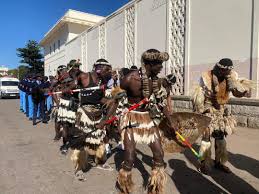
Bulawayo Day commemorates the declaration of Bulawayo as a Town on 1 June 1894. The City of Bulawayo formally declared 1 June as Bulawayo Day on 2 October 2019, to be celebrated annually as an opportunity to mark the city's distinct and proud heritage, rich diversity and artistic potential.
THE NAME
The city was founded around 1840 as the kraal of King Mzilikazi and was first known as Gib' Xhegu, meaning "get rid of the old man" — apparently a reference to Mzilikazi, who had been out of contact and was presumed dead. When Mzilikazi's son Lobengula later succeeded him, he renamed the settlement KoBulawayo. The name is generally interpreted to mean "the place of the one being killed or persecuted," a reference rooted in the succession disputes that defined the early Ndebele kingdom.
KEY DATES IN THE CITY'S HISTORY
1839 — King Mzilikazi arrives in present-day Zimbabwe from South Africa and founds the Ndebele Kingdom.
~1840 — Bulawayo is founded as Mzilikazi's kraal, initially called Gib' Xhegu.
1868 — King Mzilikazi dies. In 1870, King Lobengula establishes Old Bulawayo as his capital.
1871 — King Lobengula renames the royal town from Gibixhegu to KoBulawayo.
1881 — Lobengula moves his capital to the site of the modern city and orders the old settlement destroyed by fire.
1893 — The settlement is captured by British South Africa Company soldiers during the First Anglo-Matabele War. The first white settlers arrive and rebuild the town.
1 June 1894 — Bulawayo is declared a town — the date now commemorated as Bulawayo Day.
November 1897 — Bulawayo holds its first municipal council of nine elected members.
4 November 1943 — Bulawayo attains city status under Proclamation 41.
2019 — Bulawayo City Council officially declares 1 June as Bulawayo Day, to be marked annually.
THE CITY TODAY
Bulawayo is located in southwest Zimbabwe and is the country's second oldest and second largest urban settlement after Masvingo and Harare, respectively.
It is the metropolitan centre of three provinces, stretching from Beitbridge on the Limpopo River in the south to Victoria Falls on the Zambezi River in the north.
According to the 2022 Zimbabwe census, Bulawayo's population stands at 665,592.
Beyond "City of Kings," the city carries popular nicknames including "Skies," "KoNtuthu," "eToni," "Blues".
Bulawayo is a melting pot of southern African culture with over 15 languages spoken in the city. The most common are isiNdebele, Shona, tjiKalanga and English.
Source: CITE