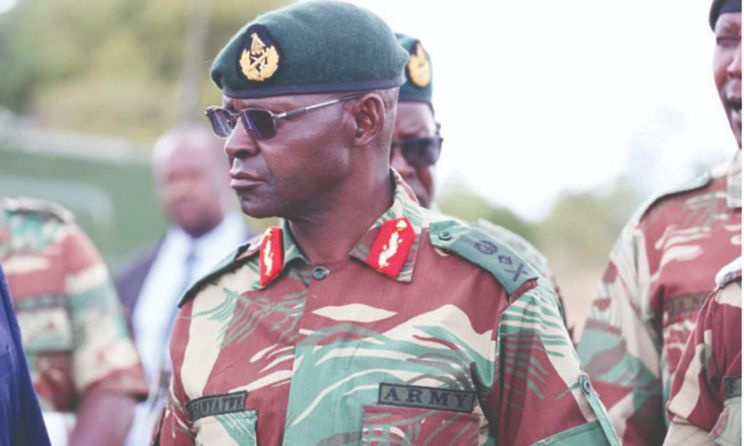
By Showbiz Reporter — Sports, Recreation, Arts and Culture Minister General Anselem Sanyatwe has appointed a new Board of Directors for the National Arts Council of Zimbabwe (NACZ), marking a significant reshuffle in the governance of the country’s creative sector.Activewear
The announcement comes at a politically sensitive moment for Sanyatwe, a key military figure whose recent trajectory within the state has been shaped by factional tensions inside Zanu PF and shifting power dynamics between President Emmerson Mnangagwa and military-linked elites.
Sanyatwe—once considered one of the most influential commanders in the Zimbabwe Defence Forces—was the former Head of the Presidential Guard Brigade and a central figure in the 2017 military-assisted political transition that brought Mnangagwa to power.Zimbabwean history book
However, his rise was abruptly interrupted in 2019, when he was sent to Tanzania as ambassador, a diplomatic posting widely interpreted as a demotion and an effort by President Mnangagwa to dilute the power of military commanders perceived as too close to Vice President Constantino Chiwenga.
Sanyatwe was among a group of senior officers affected during Mnangagwa’s attempts to reassert civilian supremacy and neutralise military influence in politics following the 2017 operation.
His recall from diplomatic service in 2023 and appointment as a Cabinet minister in 2024 was therefore viewed by analysts as part of the ongoing reshuffling of power blocs inside Zanu PF—representing Mnangagwa’s attempt to rebalance key portfolios while also maintaining influence over figures previously aligned with Chiwenga.
It is against this backdrop of internal Zanu PF manoeuvring that Sanyatwe has now unveiled the latest NACZ Board, a move some insiders see as consolidating his authority within the ministry and extending his political presence beyond the security sector.
The appointments were approved by President Mnangagwa.
Among the most notable decisions is the reappointment of Dr. Nozipo J. Maraire as Board Chairperson for a second term. Sanyatwe described her leadership as “transformative,” crediting her with driving significant institutional growth since 2021.
According to a statement from the NACZ, the board’s mandate—running from 2025 to 2029 under the Public Entities Corporate Governance Act—includes:
crafting national arts policy,
strengthening governance and funding frameworks,
and advancing programmes that expand public participation in arts development.
The newly appointed NACZ Board comprises:
Dr. Nozipo J. Maraire – Chairperson
Raphael P. Mhone
Brig. Gen. (Rtd) Richard Matambo
Gail Van Jaarsveldt
Tariro Washe
Takawira Maswiswi
Sibongile Ncube
Farai I. Mpfunya
Lawrence Mkwala
Lucia Mkandhla
The board brings expertise ranging from creative industries to business management and military administration. Notably, the inclusion of another retired general, Richard Matambo, is likely to fuel debate about the widening influence of military-linked figures in civilian institutions at a time when Zanu PF factional battles continue to simmer ahead of the party’s next congress cycle.
In its statement, the NACZ expressed gratitude to departing board members, acknowledging their commitment and the groundwork they laid for future reforms.
“The National Arts Council of Zimbabwe sincerely thanks the outgoing board members for their committed service and valuable contributions during their tenure,” the Council said.Zimbabwean history book
Discover more
Property investment guides
While the new board ushers in a fresh chapter for Zimbabwe’s arts sector, the timing and political context surrounding Minister Sanyatwe’s actions signal more than just administrative change.
For a minister navigating the shifting alliances of Zanu PF’s internal power struggles, the NACZ appointments may also serve to reinforce his standing within the ruling party—particularly as debates intensify over succession, the military’s role in governance, and the future balance of power between Mnangagwa and Chiwenga.
Entertainment
General Sanyatwe dissolves NACZ Leadership